How Long Do Late Payments Stay on Your Credit Report? 2026 Update

Short Answer: Late payments can stay on your credit report for up to 7 years, depending on the severity of the delay. However, the negative impact of a late payment on your credit score diminishes over time, especially with consistent, on-time payments afterward.
Late payments can feel like a significant setback on your credit journey. Whether it’s a missed bill payment or an overdue credit card payment, they can have long-lasting effects on your credit score and financial future.
If you’re wondering how long these late payments will stick around on your credit report, the answer is more complex than just a number. While late payments can stay on your credit report for up to 7 years, the real question lies in how long they impact your credit score.
In this blog post, we’ll explore everything you need to know about late payments, how they affect your credit, and how long they stay on your credit report. Plus, we’ll show you what you can do to recover and minimize the damage.
What Is a Late Payment on a Credit Report?
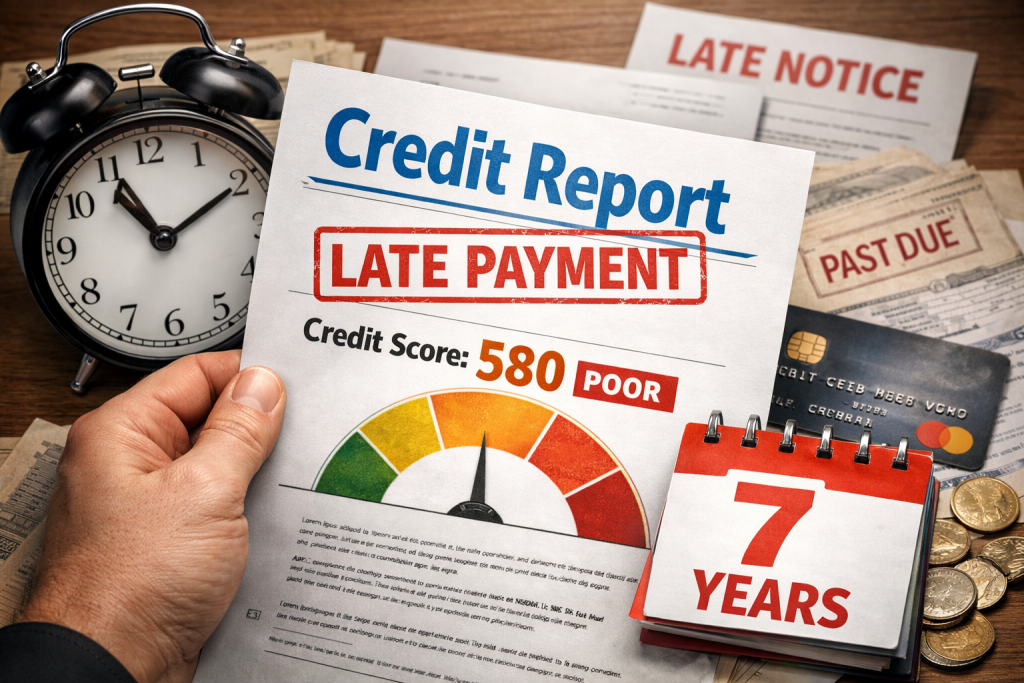
A late payment occurs when you fail to make a required payment by its due date. This can apply to various types of accounts, including credit cards, mortgages, car loans, and utilities. The severity of the late payment is usually determined by how long it goes unpaid:
- 30 Days Late: When your payment is more than 30 days late, your creditor may report the late payment to the credit bureaus. It typically doesn’t have a severe impact on your score yet but will still be recorded.
- 60 Days Late: By this point, your credit score will likely begin to experience a more noticeable drop. The longer you delay payment, the more your credit score is affected.
- 90+ Days Late: Payments that are 90 or more days late are considered “seriously delinquent,” and they are viewed negatively by lenders. These types of late payments will have a significant impact on your credit score.
- Charge-Offs/Collections: If the account is charged off (or sent to collections), the late payment is considered even more damaging, and the impact on your score becomes much more significant.
Read Also: 6 Best Steps to Remove Paid Collections From Credit Report
How Long Do Late Payments Stay on Your Credit Report?

Generally, a late payment will stay on your credit report for 7 years. This applies to all major credit bureaus: Equifax, Experian, and TransUnion. However, the impact of the late payment will diminish over time as long as you make consistent, on-time payments afterward. Here’s how the timeline typically works:
- First Few Months: During the first few months, the late payment may significantly impact your score, especially if it’s the first negative mark on your report.
- One to Two Years: Over the next year or two, the effect of the late payment may lessen slightly, but it can still be a red flag for lenders and impact your ability to get favorable credit terms.
- Five Years Later: While the late payment is still visible, it won’t have as much influence on your credit score at this stage. Lenders will focus more on your recent payment history than past issues.
- Seven Years Later: After seven years, the late payment will be removed from your credit report. However, by this time, your credit profile will ideally have improved through consistent on-time payments.
Why Late Payments Can Stay on Your Credit Report for So Long
Late payments remain on your credit report for 7 years because they reflect your financial behavior and reliability.
Credit reporting agencies keep a record of your payment history so that lenders can assess how responsible you are with managing debt. A consistent history of missed or late payments signals to lenders that you may pose a higher risk.
Even though it might seem harsh, the 7-year rule allows individuals time to repair their credit history through positive financial behavior, even if they’ve made past mistakes. This is why it’s important to monitor your credit report regularly and address any issues as soon as possible.
How Late Payments Affect Your Credit Score
Late payments are one of the biggest contributors to a drop in your credit score. Since payment history accounts for 35% of your FICO score (and is similarly weighted in VantageScore), it’s critical to avoid missing payments whenever possible.
Here’s a breakdown of how late payments affect your credit score:
- 30-Day Late Payment: May cause a small dip in your score, especially if you have a good credit history. However, the impact is generally less severe.
- 60-90 Day Late Payment: A more significant drop, especially if you’ve missed multiple payments. Your credit score will likely take a noticeable hit.
- 90+ Day Late Payment: Considered a “seriously derogatory” mark, and it will cause a major drop in your credit score.
See Also: Vantage Score vs FICO: 7 Critical Truths Credit Pros Miss
What to Do if You Have Late Payments on Your Credit Report
If you’re struggling with late payments, there are steps you can take to improve your credit score over time:
- Make Timely Payments: The most important factor is to make your payments on time going forward. Once you have a history of on-time payments, lenders will see that you’ve made efforts to correct your behavior.
- Dispute Inaccurate Information: If the late payment was reported incorrectly, you can file a dispute with the credit bureau to have it removed.
- Negotiate with Creditors: If your late payments are significant, you can contact your creditors and request a goodwill adjustment, especially if the late payment was due to exceptional circumstances.
- Use Credit Repair Tools: Services like Credit Veto can help you dispute late payments, monitor your credit, and take steps to improve your credit score. Tools like Credit Veto provide detailed credit reports and real-time insights into your credit profile, helping you stay on track.
Must Read: Does Paying Rent Late Affect Your Credit? Everything You Need to Know
Conclusion: Can Late Payments Be Fully Removed From Your Credit Report?
Late payments will stay on your credit report for 7 years, but they don’t have to control your financial future. By improving your payment habits, disputing errors, and seeking professional credit repair assistance like Credit Veto, you can begin the journey toward a better score. With time, your credit will improve, and the impact of those late payments will lessen.
If you’re struggling with late payments or want to take action to improve your credit, Credit Veto offers the tools and expertise you need to make the process easier and more efficient. Start taking control of your credit today, and let us help guide you every step of the way.
Frequently Asked Questions (FAQs)
How long do late payments stay on your credit report?
Late payments generally stay on your credit report for up to 7 years.
Can I remove a late payment from my credit report?
Yes, you can dispute errors or request a goodwill adjustment from your creditor.
How much will a late payment affect my credit score?
The impact depends on the severity of the late payment. It can significantly lower your score, especially if the payment is over 30 days late.
 How Many Credit Cards Should I Have? Avoid These 4 Mistakes
  How to Check Personal Credit Report: 7 Easy Steps
  How a Credit Repair Course Can Improve Your Credit Score and Business Faster
  How Fast Will a Car Loan Raise My Credit Score? 2026 Real Timeline
  Vantage Score vs FICO: 7 Critical Truths Credit Pros Miss
  How to Read a Business Credit Report: 5 Key Tips for Success
  How Long Do Late Payments Stay on Your Credit Report? 2026 Update