How to Remove Closed Accounts from Credit Report Fast

You could be hurting your credit score right now without even knowing it. Many people try to improve their credit and start searching for how to remove closed accounts from credit report, thinking it will fix everything. But here is the truth that most people do not realize. Removing the wrong account can actually make your credit worse.

That is the frustrating part. You are trying to do the right thing, but one wrong move can set you back months. This is why understanding how to remove closed accounts from your credit report the right way is so important. Closed accounts do not just sit there for no reason. Some of them are helping your credit, while others may be holding you back. The problem is that most people cannot tell the difference, so they either remove too much or do nothing at all.
In this article, you will learn what actually works, what to avoid, and how to make the right decision so you do not damage your credit while trying to fix it.
Read Also: Best Credit Repair Software for Credit Repair Business
Can You Remove Closed Accounts from a Credit Report?
Yes, you can remove closed accounts from your credit report, but only in certain situations. If the account contains incorrect information, is a duplicate, or is linked to identity theft, you have the right to dispute it and request removal. In these cases, the credit bureau must investigate and remove the account if it cannot verify the information.
However, if the closed account is accurate and in good standing, it usually cannot be removed early. In fact, positive closed accounts can help your credit score because they add to your credit history and show a record of on-time payments.
Most closed accounts stay on your credit report for a set period. Positive accounts can remain for up to 10 years, while negative accounts typically stay for about 7 years from the date of the issue.
The key is understanding whether the account is helping or hurting your credit before trying to remove it. Removing the wrong account can reduce your credit history and negatively affect your score.
What Are Closed Accounts on a Credit Report
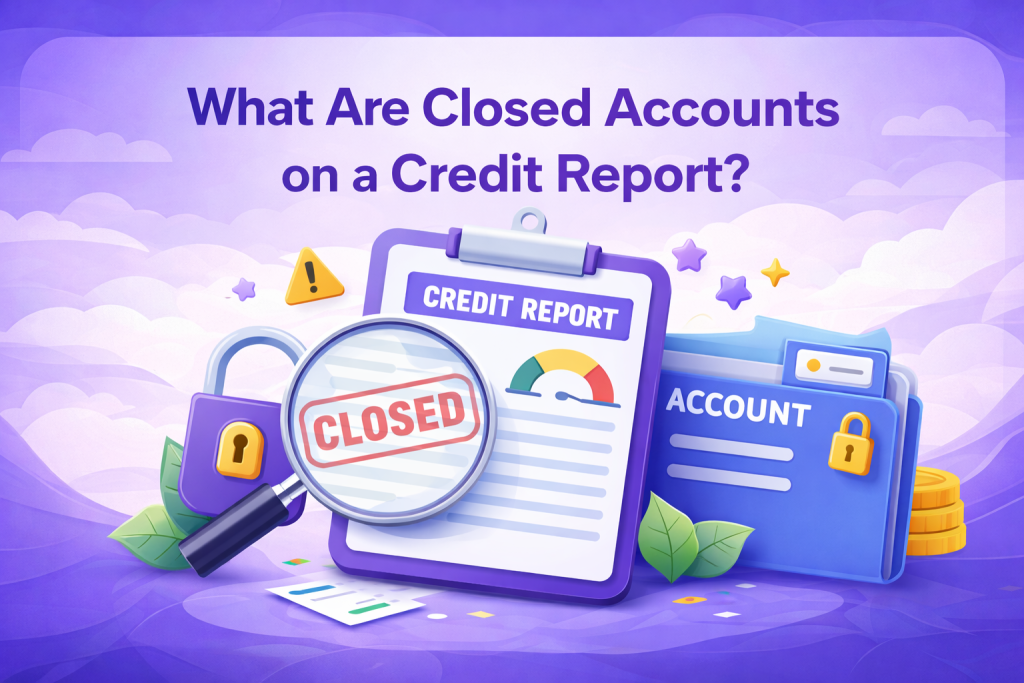
Closed accounts are credit accounts that are no longer active. This means the account has been paid off, settled, or closed by either you or the lender. Even though the account is no longer in use, it does not disappear from your credit report right away.
Instead, it remains on your report as part of your credit history. This helps lenders see how you have handled credit in the past, which is an important factor when they decide whether to approve you for new credit.
Types of Closed Accounts
Not all closed accounts are the same. They can fall into two main categories.
The first type is accounts closed in good standing. These are accounts that were paid on time and managed properly before being closed. They usually have a positive impact on your credit because they show a history of responsible behavior.
The second type is accounts with negative history. These may include late payments, defaults, or accounts sent to collections before being closed. These can hurt your credit and may be the reason you are looking for ways to remove them.
Why Closed Accounts Stay on Your Report
Many people expect closed accounts to be removed immediately, but that is not how credit reporting works.
Closed accounts stay on your credit report because they provide a record of your financial behavior over time. Lenders use this information to understand how reliable you are when it comes to borrowing and repaying money.
Keeping these accounts on your report helps build your credit history, which is one of the key factors used to calculate your credit score.
Why This Matters Before You Remove Anything
Before trying to remove closed accounts, it is important to understand what role they play.
Some closed accounts are helping your credit, while others may be hurting it. If you remove the wrong one, you could reduce your credit history and lower your score.
This is why the next step is to understand when removal is actually the right move.
Can You Remove Closed Accounts from a Credit Report

Yes, you can remove closed accounts from your credit report, but only under specific conditions. This is where many people get confused, because not every closed account can or should be removed.
The key factor is whether the information on the account is accurate.
When You Can Remove Closed Accounts
You can remove a closed account if there is something wrong with it. This includes situations where:
- The account does not belong to you
- The details are incorrect, such as wrong balance or dates
- The account appears more than once as a duplicate
- The account is linked to identity theft
In these cases, you have the right to dispute the account. If the credit bureau cannot verify the information, they must remove it from your report.
When You Cannot Remove Closed Accounts
If the closed account is accurate, it usually cannot be removed early. For example, if you had a credit card, used it properly, and then closed it, that account is part of your credit history. Even if you no longer use it, it will remain on your report for a set period.
Trying to remove accurate information will not work, and repeated disputes may be ignored.
Why Some Closed Accounts Should Stay
Not all closed accounts are bad. Accounts that were managed well can actually improve your credit profile. They show that you have experience handling credit and making payments on time. This can help build trust with lenders.
Removing these accounts can reduce your credit history and may lower your score.
The Real Decision You Need to Make
Before trying to remove anything, you need to ask one simple question. Is this account helping my credit or hurting it?
If it is helping, it is usually better to leave it. If it is incorrect or damaging your report unfairly, then removing it makes sense. Understanding this difference is what helps you make the right move.
How to Remove Closed Accounts from Credit Report (Step by Step)
If you have confirmed that a closed account should be removed, the next step is to take action the right way. The process is simple, but each step matters. Missing details or rushing through it can reduce your chances of success.
Here is a step-by-step guide on how to remove closed accounts from a credit report.
Step 1: Check Your Credit Report Carefully
Start by reviewing your credit report from all three major bureaus.
Look closely at the closed account and confirm:
- The account details
- The payment history
- The account status
Make sure there is a valid reason to remove it, such as incorrect information or identity theft. Do not move forward unless you are sure the account should be disputed.
Step 2: Identify the Exact Problem
Be clear about what is wrong with the account.
For example:
- The account does not belong to you
- The balance is incorrect
- The payment history is wrong
- The account appears more than once
Knowing the exact issue will help you write a strong dispute and avoid confusion during the investigation.
Step 3: Gather Supporting Documents
Before you submit a dispute, collect proof that supports your claim.
This can include:
- Bank statements
- Payment receipts
- Account closure letters
- Identity documents
Your dispute is stronger when it is backed by clear evidence.
Step 4: Submit a Dispute
You can dispute the closed account in two main ways:
- Online through the credit bureau’s website
- By sending a dispute letter
In your dispute, clearly explain what is wrong and what action you want. Attach your supporting documents to strengthen your case.
Step 5: Wait for the Investigation
After you submit your dispute, the credit bureau will review your claim.
They will:
- Check the information
- Contact the company that reported it
- Verify whether the details are accurate
This process usually takes about 30 days.
Step 6: Review the Results
Once the investigation is complete, you will receive an update.
There are three possible outcomes:
- The account is removed
- The account is corrected
- The account remains unchanged
If the information cannot be verified, it must be removed from your credit report.
Step 7: Follow Up if Needed
If the account is not removed and you still believe it is incorrect, you can take further action.
You may:
- Submit another dispute with stronger proof
- Contact the company directly
- Provide additional details
Sometimes, resolving an issue takes more than one attempt.
Why This Process Works
The key to removing closed accounts from your credit report is accuracy and consistency.
When you follow the correct steps, provide proof, and stay organized, your chances of success improve.
A Smarter Way to Handle the Process
Many people find this process time-consuming, especially when dealing with multiple accounts or complex issues.
Instead of managing everything manually, using a system like Credit Veto can help simplify the process. It helps identify which accounts should be disputed, generates the right disputes, and keeps everything organized so you can stay on track.
.
When You Should Remove Closed Accounts
Knowing how to remove closed accounts from your credit report is important, but knowing when to do it is even more important. Not every closed account needs to be removed, and in some cases, removing the wrong one can do more harm than good.
There are specific situations where removing a closed account makes sense, especially when the information is not accurate or is hurting your credit unfairly.
When the Account Contains Errors
If a closed account has incorrect details, it should be removed or corrected.
This can include:
- Wrong balance
- Incorrect payment history
- Wrong dates
- Incorrect account status
Errors like these can affect your credit score and should be disputed as soon as possible.
When the Account Does Not Belong to You
If you see a closed account that you do not recognize, it may be a sign of identity theft or a reporting error.
In this case, you should act quickly and dispute the account. You may also need to provide proof of your identity to support your claim.
When There Are Duplicate Accounts
Sometimes the same account appears more than once on your credit report.
This can make it look like you have more debt or more activity than you actually do. If you find duplicates, you should dispute the extra listing and request removal.
When the Account Is Reporting Incorrect Status
A closed account should be marked as closed. If it is still being reported as open, or if it shows incorrect activity after being closed, this can create confusion and affect your credit profile.
These types of reporting errors should be corrected or removed.
When Negative Information Is Incorrect
If a closed account shows late payments or negative marks that are not accurate, this is a strong reason to dispute it.
Negative information has a bigger impact on your credit score, so correcting these errors can make a noticeable difference.
Why Timing is Important
It is important to act when you find an issue, but it is just as important to understand what kind of issue it is.
Trying to remove a closed account without a valid reason will not work. But when the account is incorrect or unfairly reported, taking action can help improve your credit.
A Smarter Way to Handle This
Many people struggle at this stage because they are not sure which accounts should be removed and which ones should stay.
This is where a more structured approach helps. Instead of guessing, tools like Credit Veto can help identify which accounts are actually worth disputing, so you do not waste time removing accounts that are helping your credit.
When You Should Not Remove Closed Accounts
While it may seem like removing closed accounts will improve your credit, that is not always the case. In fact, some closed accounts are actually helping your credit profile, and removing them can reduce your score instead of improving it.
Understanding when to leave these accounts alone is just as important as knowing how to remove them.
When the Account Is in Good Standing
If a closed account was managed well, it is usually better to keep it on your credit report.
This includes accounts where:
- Payments were made on time
- The balance was paid off
- There were no negative marks
These accounts show lenders that you have a history of responsible credit use, which can strengthen your profile.
When It Adds to Your Credit History
The length of your credit history is an important factor in your credit score.
Closed accounts, especially older ones, help extend your credit history. If you remove them, your average account age may decrease, which can negatively affect your score.
Keeping these accounts can help maintain a strong credit history over time.
When It Improves Your Payment History
Payment history is one of the biggest factors in your credit score.
A closed account with a record of on-time payments adds positive information to your report. Removing it means losing that positive history, which can reduce your overall score.
When the Information Is Accurate
If the account is correct and properly reported, there is no valid reason to remove it.
Credit bureaus will not remove accurate information simply because you request it. Trying to dispute correct accounts can lead to rejected disputes and wasted time.
When You Are Trying to Build Credit
If you are working on improving your credit, keeping positive closed accounts can actually help you.
They show that you have experience managing credit, which makes you more reliable in the eyes of lenders. Removing them may weaken your overall profile.
See Also: How to Become a Certified Credit Repair Specialist
Conclusion
Understanding how to remove closed accounts from your credit report is not just about taking action. It is about making the right decision before you act. Some closed accounts can hurt your credit if they are incorrect, while others can actually help you build a stronger credit profile over time.
The most important step is knowing the difference. When an account is inaccurate, duplicated, or linked to identity theft, removing it makes sense. But when it reflects a positive history, keeping it can support your credit score and improve your chances with lenders.
If you choose to handle the process yourself, make sure you follow each step carefully, provide clear proof, and stay consistent with your follow up. A well-prepared dispute can make a real difference when it is done correctly.
For those who want a more structured and guided approach, Credit Veto helps simplify the process. It allows you to identify which accounts should be disputed, create accurate disputes, and keep everything organized from start to finish.
If you are ready to take control of your credit, visit Credit Veto today and let it help you identify errors, create accurate disputes, and take control of your credit with confidence.
FAQs
What is a 609 letter to remove closed accounts?
A 609 letter is a type of dispute letter based on Section 609 of the Fair Credit Reporting Act (FCRA). It is used to request verification of information on your credit report, including closed accounts. The idea is that if the credit bureau or creditor cannot provide proper proof that the account is accurate, it may be removed.
However, a 609 letter does not automatically remove closed accounts. It only works if the information is incorrect or cannot be verified. If the closed account is accurate and properly reported, it will remain on your credit report.
Can I remove closed accounts from my credit history?
You can remove closed accounts from your credit history only if there is a valid reason. This includes cases where the account is inaccurate, duplicated, or linked to identity theft. In these situations, you can dispute the account and request removal.
If the closed account is accurate, especially if it is in good standing, it usually cannot be removed early. Positive closed accounts can actually help your credit by adding to your history and showing on-time payments, so removing them may not always be the best option.
How long do closed accounts stay on credit?
Closed accounts can stay on your credit report for several years. Accounts in good standing usually remain for up to 10 years, while accounts with negative history typically stay for about 7 years from the date of the issue. After this period, they are automatically removed from your credit report.
Will removing closed accounts help credit score?
Not always. Removing closed accounts can help your credit score only if the account has negative or incorrect information. If the account is accurate and in good standing, it usually helps your credit by adding to your history and showing on-time payments.
Removing these positive accounts can actually lower your score by reducing your credit history and overall profile
About The Author

 How to Remove Inaccurate Items from Your Credit Report Quickly
  Best Credit Repair Companies That Are Worth Trusting
  How to Dispute Credit Report Errors and Win in 2026
  Why Did My Credit Score Drop After Paying Off Debt? Proven Fixes
  How to Fix a Low Credit Score Fast: What Works in 2026
  Credit Report Dispute Letter: Powerful Template That Gets Results Fast
  The Smartest AI Credit Repair Tool to Fix Your Credit Fast