Why Did My Credit Score Drop After Paying Off Debt? Proven Fixes
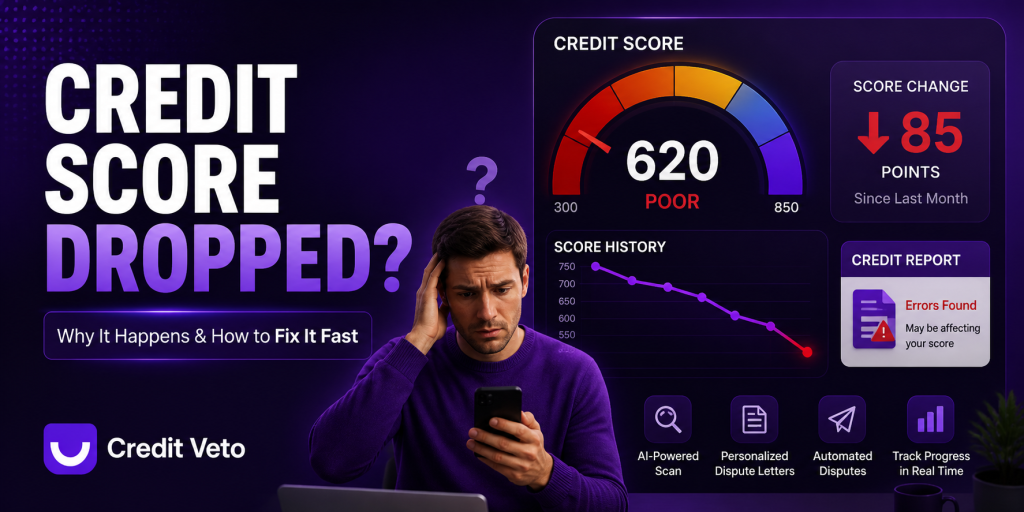
You finally paid off your debt, expecting your credit score to go up, not down. Then you check your score and see the opposite. It drops. That moment of confusion is what leads many people to search for why did my credit score drop after paying off debt? Because it feels like you did everything right and still got the wrong result.
If you are wondering why did my credit score drop after paying off debt? You are not alone. This is one of the most common and frustrating situations people face when trying to improve their credit. It feels unfair, especially when you have worked hard to clear your balances and stay financially responsible.
The truth is that your credit score does not react the way most people expect. Paying off debt is a good move, but the way credit scoring systems interpret that action can sometimes lead to a temporary drop. In other cases, the drop may point to something deeper, such as reporting issues or errors that you have not noticed yet.
In this guide, you will understand exactly why your score dropped, when it is normal, and what you need to do next to fix it and get your credit back on track.
READ: Credit Repair vs. Credit Counseling: Which One is Right for You?
Why Did My Credit Score Drop After Paying Off Debt
Your credit score can drop after paying off debt because of how credit scoring models interpret changes in your profile. When you pay off a loan or a credit card, your credit utilization, account status, and overall credit mix can change at the same time. These changes can sometimes lead to a temporary decrease in your score.
One common reason is that paying off a credit account may reduce your total available credit or close an account, which can affect your credit history and utilization ratio. Another reason is timing. Lenders may take time to update your payment status, and during that period, your credit report may not fully reflect the improvement.
In some cases, the drop may also be linked to reporting issues, such as incorrect balances, delayed updates, or errors on your credit report. This is why it is important to check your report closely after paying off any debt.
The key thing to understand is that this drop is often temporary, but it should not be ignored. Knowing the exact cause helps you decide whether to wait for your score to recover or take action to fix a deeper issue.
What This Means for You
If your credit score dropped after paying off debt, it does not mean you made a mistake. It means your credit profile has changed, and you need to understand how that change is being interpreted.
Why Your Credit Score Can Drop After Paying Off Debt
When your credit score drops after paying off debt, it is usually not a mistake. It is the result of how credit scoring models respond to changes in your credit profile. Your score is not based on one action alone. It is based on several factors working together, and when one changes, it can affect others.
Understanding these factors helps you see why something positive, like paying off debt, can sometimes lead to a temporary drop.
Changes in Credit Utilization
Credit utilization is the amount of credit you are using compared to your total available credit.
When you pay off a credit card, your utilization should improve. However, if that account is closed after being paid off, your total available credit may decrease. This can cause your utilization ratio to rise again, even if you owe nothing, which can affect your score.
Impact of Account Closure
In some cases, paying off a loan or credit account leads to the account being closed.
Closed accounts can affect your credit score because they reduce the number of active accounts on your profile. If the closed account was one of your older or more stable accounts, this can also affect the strength of your credit history.
Changes in Your Credit Mix
Credit mix refers to the different types of credit you have, such as credit cards, personal loans, or other accounts.
If you pay off your only loan, your credit mix becomes less diverse. Credit scoring systems often favor a mix of different credit types, so losing that balance can lead to a small drop in your score.
Reporting Delays and Timing
Another common reason for a drop is timing.
After you pay off a debt, it may take some time for the lender to update your account status. During this period, your credit report may not fully reflect the change, which can affect your score temporarily.
Once the update is processed, your score may adjust again.
How These Factors Work Together
These changes do not happen in isolation.
When you pay off debt, you may experience:
- A closed account
- A shift in your credit mix
- A temporary change in utilization
- A delay in reporting
Together, these can cause a short-term drop in your score, even though your overall financial position has improved.
Why This Is Not Always a Problem
It is important to understand that a drop in your credit score after paying off debt does not mean you have done something wrong.
In many cases, it is a normal adjustment that happens as your credit profile changes. The key is to know whether the drop is part of this adjustment or a sign of something that needs to be fixed.
The Most Common Reasons Your Score Dropped
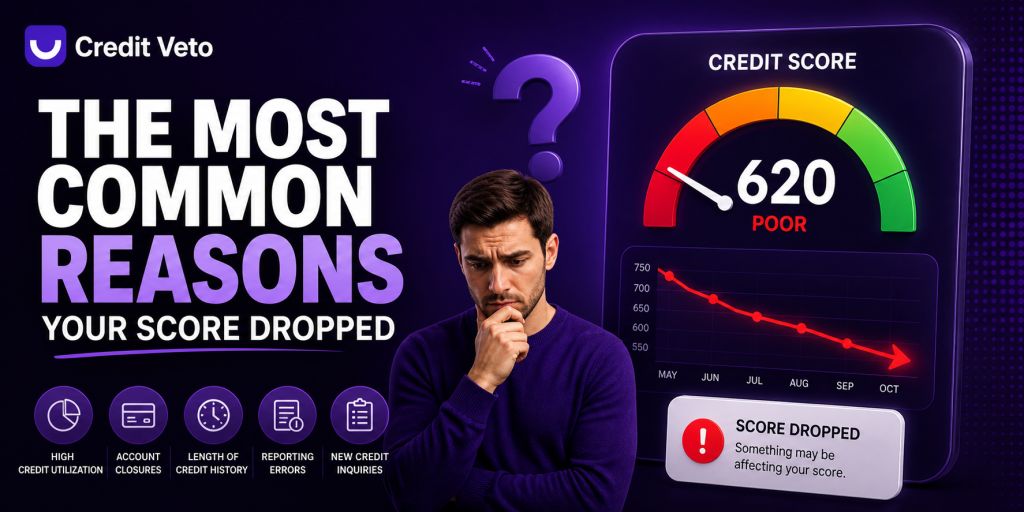
Now that you understand how credit scoring works, the next step is to identify the exact reason your score dropped. While the overall explanation may seem complex, the actual causes usually come down to a few common issues.
Knowing these helps you move from confusion to clarity.
A Closed Account Reduced Your Credit Strength
When you pay off a loan or credit card, the account may be marked as closed.
If that account was contributing positively to your credit history, its closure can reduce the overall strength of your profile. This is especially true if it was one of your older accounts or one with a strong payment history.
Even though you no longer owe money, your active credit profile becomes smaller.
Your Available Credit Dropped
If a credit card is closed after being paid off, your total available credit limit may decrease.
This can affect your credit utilization ratio, which is one of the key factors in your score. Even if your balances are low, a reduced credit limit can make your usage appear higher than before.
This change alone can cause a noticeable drop in your score.
Your Credit Mix Became Less Balanced
Credit scoring systems look at the types of credit you have.
If you had a mix of accounts and you paid off your only loan, your profile may now appear less diverse. While this is not a major issue, it can still have a small impact on your score.
The Update Has Not Fully Reflected Yet
After paying off debt, there is usually a delay before your credit report is updated.
During this period, your report may not accurately reflect your new balance or account status. This temporary mismatch can affect your score until the update is completed.
Once everything is reported correctly, your score may adjust again.
There May Be Errors on Your Credit Report
This is one of the most important reasons to pay attention to.
Sometimes, after paying off debt, your credit report may still show:
- An outstanding balance
- Incorrect account status
- Duplicate entries
- Late payments that should not be there
These errors can lower your score even when you have done everything right.
Why This Step Is Important
At this stage, the goal is to move from guessing to knowing.
Instead of assuming your score dropped for one reason, you need to identify the exact cause. This helps you decide whether to wait for your score to recover or take action to fix a problem.
What You Should Do Next
If the drop is due to normal changes, your score may recover with time.
But if the issue is related to incorrect reporting or hidden errors, waiting will not fix it. You will need to take action to correct the information.
When This Drop Is Normal (And Temporary)
Not every drop in your credit score after paying off debt is a problem. In many cases, it is a normal reaction to changes in your credit profile, and it corrects itself over time.
This is where understanding the difference between a temporary drop and a real issue becomes important.
When the Drop Is Part of a Normal Adjustment
Credit scoring systems are designed to react to changes.
When you pay off a loan or close an account, your profile shifts. The system needs time to adjust to this new structure. During that adjustment period, your score may go down slightly before stabilizing again.
This is especially common when:
- You have recently closed a credit account
- Your credit mix has changed
- Your available credit has reduced
These are not signs of a problem. They are part of how the system recalculates your score.
When Reporting Is Still Catching Up
Another reason for a temporary drop is delay in reporting.
After you pay off debt, lenders do not always update your account immediately. Your credit report may still show old balances or incomplete information for a short period.
Once the update is processed, your score may improve again because your report now reflects your actual financial position.
When Your Score Is Rebalancing
Your credit score is not fixed. It constantly adjusts based on your financial behavior.
After paying off debt, your profile becomes less dependent on borrowing. While this is positive in the long term, the system may temporarily rebalance your score as it adjusts to your new credit structure.
This is why a short-term drop does not always mean something is wrong.
How Long This Temporary Drop Can Last
In most cases, a temporary drop may last for a few weeks to a few months, depending on how quickly your information is updated and how stable your overall credit profile is.
If everything is reported correctly and you continue managing your finances well, your score should gradually recover.
When You Should Be Concerned
A drop is more likely to be a problem if:
- It is larger than expected
- It does not recover over time
- You notice unusual changes on your credit report
In these cases, the issue may not be a normal adjustment. It may be something that needs to be investigated and corrected.
Why This Section Matters
Understanding that some drops are normal helps you avoid panic and poor decisions.
Instead of reacting immediately, you can take a step back, assess the situation, and decide whether to wait or take action.
How to Fix a Credit Score Drop After Paying Off Debt
If your credit score dropped after paying off debt, the goal is not to panic or undo what you did. Paying off debt is still a strong financial move. The real focus now is to understand what changed, confirm that everything is reported correctly, and take the right steps to stabilize and improve your score.
Step 1: Review Your Credit Report Carefully
The first thing you need to do is check your credit report in detail.
Do not just look at your score. Look at the actual data behind it. Pay close attention to:
- Account balances
- Account status (open, closed, paid)
- Payment history
- Any new or unfamiliar entries
You are trying to confirm whether your paid-off account is showing correctly and whether anything else has changed unexpectedly.
Step 2: Confirm the Account Was Updated Properly
After paying off a debt, your account should reflect that clearly.
Make sure:
- The balance shows zero
- The account is marked as paid or closed
- There are no recent late payments added incorrectly
If any of these details are wrong or incomplete, your credit score may not reflect your actual financial position.
Step 3: Check for Hidden or Overlooked Errors
This is one of the most important steps.
Sometimes the drop is not just from normal changes. It may be linked to issues such as:
- Incorrect balances still showing
- Duplicate accounts
- Accounts that do not belong to you
- Payment records that are inaccurate
These errors can quietly lower your score even after you have done everything right.
Step 4: Allow Time for Normal Adjustments
If everything looks correct, the drop may be temporary.
Credit scoring systems often take time to adjust to changes in your profile. Continue managing your finances well, and your score may begin to recover as your updated information is fully processed.
Step 5: Take Action If Something Is Wrong
If you find any incorrect or questionable information, do not ignore it.
You will need to:
- Identify the exact issue
- Gather proof, such as payment confirmations
- Dispute the incorrect information with the credit bureaus
This step is critical because your score depends on the accuracy of your credit report.
Where Most People Struggle
At this stage, many people know something is wrong, but they are not sure what exactly caused the drop or how to fix it properly.
They may:
- Miss small but important errors
- Write weak or incomplete disputes
- Send generic letters that do not match their situation
- Lose track of the process
This is why many disputes fail or take longer than expected.
How Credit Veto Helps You Find and Fix the Real Cause
At this stage, the real issue is no longer just the drop in your credit score. The real issue is understanding what caused it and making sure your credit report reflects your actual financial situation.

This is where many people get stuck.
You may know something is wrong, but identifying the exact cause and fixing it properly is not always straightforward. Credit reports can be complex, and small errors can be easy to miss. Even when you find an issue, knowing how to handle it correctly is another challenge.
Identifies What Is Actually Affecting Your Score
Instead of guessing, Credit Veto helps you focus on what matters.
It reviews your credit report to identify items that may be:
- Inaccurate
- Outdated
- Or cannot be properly verified
These are the types of issues that can affect your score unfairly and are worth investigating further.
Creates Disputes That Match Your Situation
One of the biggest mistakes people make is sending generic dispute letters.
Credit Veto helps you avoid this by generating dispute letters that are tailored to your specific situation. This makes your request clearer and increases the chances that it will be properly reviewed.
Each dispute is based on the actual issue found on your report, not a one-size-fits-all template.
Helps You Handle the Process the Right Way
Disputing credit report issues is not just about sending a letter.
It involves:
- Knowing what to challenge
- Providing the right details
- Following up when needed
- Tracking the outcome
Credit Veto helps structure this process so you do not miss important steps or lose track of your progress.
Keeps Everything Organized and Trackable
Many people start the process but struggle to stay consistent.
Credit Veto keeps your disputes and updates in one place, making it easier to monitor changes and understand what is happening at each stage. This removes a lot of the uncertainty that comes with handling disputes manually.
Works Within the Right Framework
It is important to understand that Credit Veto does not remove accurate information.
It focuses on identifying and addressing items that are inaccurate, outdated, or unverifiable. This ensures that your credit report is corrected in a proper and compliant way, rather than relying on shortcuts that do not work.
Why This Approach Is More Effective
When your credit score drops after paying off debt, the solution is not always obvious.
You need to:
- Understand the cause
- Verify your report
- Correct any issues properly
Trying to do all of this manually can be overwhelming and time-consuming. Using a structured system makes it easier to handle the process correctly and improves your chances of seeing real results.
SEE: How a Credit Repair Course Can Improve Your Credit Score and Business Faster
Conclusion
Paying off your debt should feel like progress, not punishment. So when your credit score drops after doing the right thing, it can be confusing and frustrating. The key thing to understand is that your credit score reacts to changes in your profile, not just your intentions.
In many cases, the drop is temporary and happens as your credit profile adjusts. But in other cases, it may point to something deeper, such as incorrect reporting or errors that are affecting your score without your knowledge.
This is why it is important not to guess. You need to look at your credit report closely, understand what changed, and confirm that everything is accurate. If something is wrong, taking action early can make a big difference in how quickly your score recovers.
Fixing your credit is not about doing more. It is about doing the right things and making sure your financial record reflects your real behavior.
If you want a clearer way to find out what is actually affecting your score and fix it properly, Credit Veto gives you a structured way to identify issues, handle disputes correctly, and stay in control of your credit.
About The Author

 How to Remove Inaccurate Items from Your Credit Report Quickly
  Best Credit Repair Companies That Are Worth Trusting
  How to Dispute Credit Report Errors and Win in 2026
  How to Fix a Low Credit Score Fast: What Works in 2026
  How to Remove Closed Accounts from Credit Report Fast
 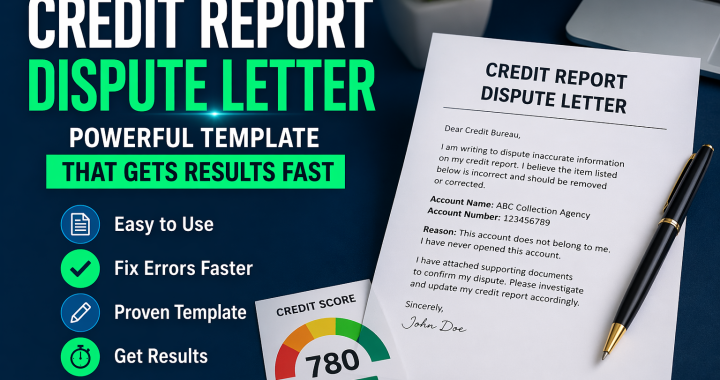 Credit Report Dispute Letter: Powerful Template That Gets Results Fast
 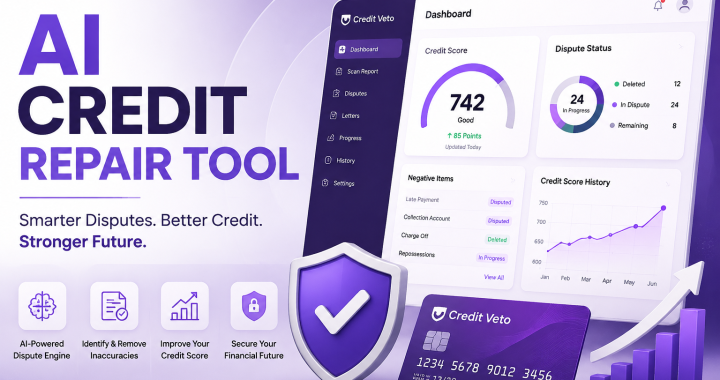 The Smartest AI Credit Repair Tool to Fix Your Credit Fast