How to Remove Inaccurate Items from Your Credit Report Quickly
Why Inaccurate Items from your Credit Report can Hurt Your Credit

Errors on your credit report can be more damaging than you think. Even a single late payment reported incorrectly or a duplicate account can lower your score, increase interest rates, or prevent you from getting approved for loans and credit cards.
Many people wonder how to remove inaccurate items from their credit report but get overwhelmed by confusing processes, multiple credit bureaus, and unclear instructions. The stakes feel high, and making a mistake can cost you time, money, and opportunities.
In this guide, you’ll learn what counts as an inaccurate item, how these errors impact your credit, and why using modern AI-powered tools like Credit Veto can make the process faster, more accurate, and easier to manage. By the end, you’ll understand how to take control of your credit repair journey with confidence.
ALSO: Credit Repair vs. Credit Counseling: Which One is Right for You?
What Counts as an Inaccurate Item
If you want to remove inaccurate items from your credit report, the first step is knowing what actually counts as an error. According to the CFPB, about 1 in 5 consumers have at least one mistake on their credit report, making this a common issue that can hurt your score and financial opportunities.
Common types of inaccurate items include:
- Incorrect late payments: A payment marked late even though you paid on time can lower your score unnecessarily.
- Duplicate accounts or collections: Sometimes the same account appears twice, or a collection is reported more than once.
- Wrong balances or credit limits: Errors in reported balances can affect your credit utilization and overall score.
- Outdated negative items: Some negative entries remain on your report longer than the legal reporting period.
- Incorrect personal information: Name, address, or Social Security number errors can cause mismatched reporting.
Why these errors matter:
Even a single inaccurate item can:
- Lower your credit score by dozens of points
- Increase your loan interest rates
- Cause rejection for mortgages, auto loans, or credit cards
- Affect rental approvals or insurance rates
Mini-Tip: Always check all three credit bureaus, Experian, Equifax, and TransUnion. An error on one bureau may not appear on another, but it can still impact lender decisions.
Real-world example:
Jane applied for a credit card and was denied. When she pulled her report, she discovered a duplicate collection account and an incorrectly marked late payment. Using a dispute process, she corrected these items, which ultimately helped improve her score and gain approval for the card.
By understanding exactly what counts as inaccurate, you can focus your efforts on disputing items that truly impact your credit and avoid wasting time on entries that are already accurate.
How Inaccurate Items Affect Your Credit
Inaccurate items on your credit report can do more than just lower your score, they can impact your financial opportunities in real ways.
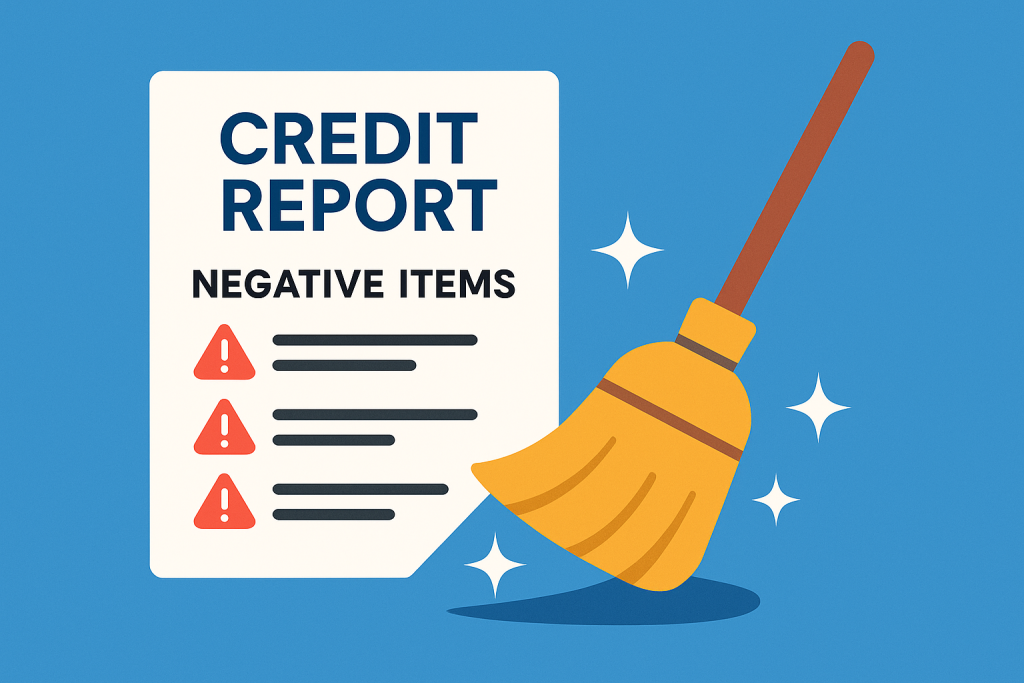
Even a single error can:
- Reduce your credit score: Late payments, duplicate collections, or wrong balances can drop your score by dozens of points.
- Increase loan and credit costs: Lenders may charge higher interest rates if your report looks riskier than it really is.
- Cause loan or credit denials: Mortgages, auto loans, and credit cards can be rejected because of errors.
- Impact rentals and insurance: Landlords and insurance companies often check credit reports when approving applications.
Mini-Tip: The impact of inaccurate items varies depending on the type of error and the lender’s criteria. Errors on recently opened accounts or high-balance accounts typically have a bigger effect.
Example scenario:
Michael wanted to refinance his mortgage, but his credit report showed a collection account that wasn’t his. Even though his score was otherwise strong, this one inaccurate entry caused his loan application to be denied. After identifying and disputing the error using a structured process, his application was approved, and his credit score improved.
By understanding the real impact of these inaccuracies, you can see why it’s crucial to remove inaccurate items from your credit report promptly. Tools like Credit Veto help automate this process, ensuring you focus on the items that truly affect your credit.
Traditional Ways to Remove Inaccurate Items
Before AI tools, removing inaccurate items from your credit report meant manual disputes with each credit bureau.
This is how it typically works:
- Obtain your credit reports – Request reports from Experian, Equifax, and TransUnion for free once a year at annualcreditreport.com.
- Identify inaccurate items – Look for errors in late payments, balances, collections, personal information, or duplicate accounts.
- Submit a dispute – You can file disputes online, by mail, or by phone with each bureau reporting the error. Include all necessary documentation to support your claim.
- Wait for investigation – The credit bureau usually investigates within 30–45 days, contacting the creditor for verification.
- Review results – Once the investigation is complete, the bureau will update your report and notify you of the outcome.
Pros of the traditional method:
- Free or low-cost
- Legal rights backed by CFPB and the Fair Credit Reporting Act
Cons:
- Time-consuming and manual
- Can be confusing to track disputes across multiple bureaus
- High chance of errors in dispute letters or missing documentation
While these methods are effective, they are often slow, complex, and difficult to manage, which is why AI-powered tools like Credit Veto are becoming the preferred solution for faster, more accurate credit repair.
Using AI to Remove Inaccurate Items Faster
AI-powered credit repair tools make it easier and faster to remove inaccurate items from your credit report compared to traditional methods.
Here’s how AI helps:
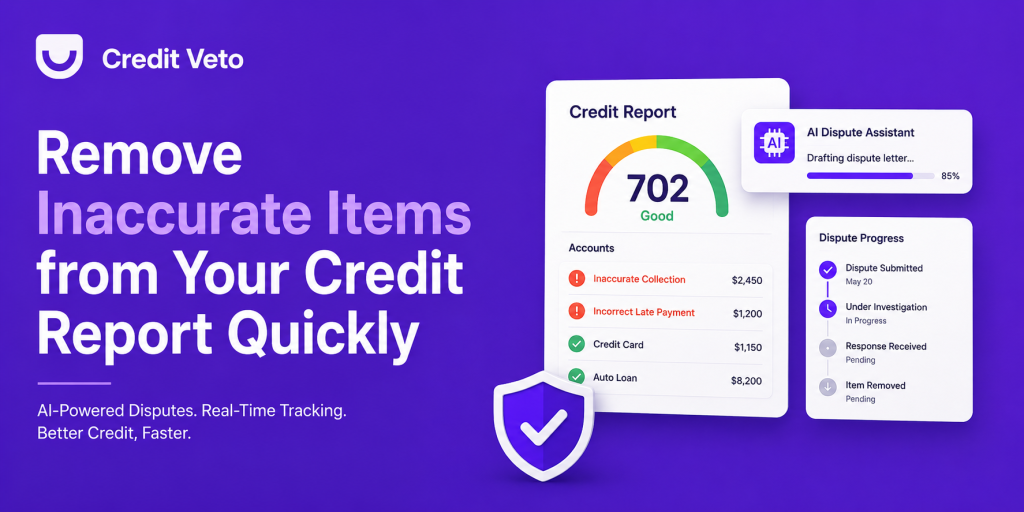
- Automated Credit Report Scanning – AI analyzes your reports from Experian, Equifax, and TransUnion in minutes, flagging items that may be inaccurate, outdated, or unverifiable.
- Focused Disputes – Instead of disputing everything manually, AI prioritizes the items that have the most impact on your score.
- Personalized Dispute Letters – Each flagged item gets a tailored dispute, which increases the likelihood of correction.
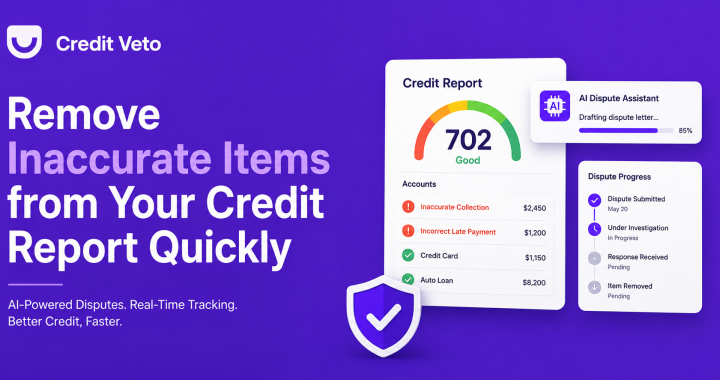
- Progress Tracking – AI dashboards let you monitor which disputes are submitted, under review, or resolved, providing visibility across all bureaus.
- Efficiency and Accuracy – Reduces human error and saves time, allowing you to address multiple issues simultaneously.
Mini-Tip: Even with AI, it’s helpful to keep supporting documents handy, such as payment receipts or account statements, to strengthen disputes.
By using AI, tools like Credit Veto transform credit repair from a manual, slow process into a structured, automated workflow, making it easier to remove inaccurate items, improve credit clarity, and regain control over your financial health.
Why Credit Veto Stands Out
When it comes to removing inaccurate items from your credit report efficiently, Credit Veto stands out as a modern, AI-powered solution.

Here’s why it’s the preferred choice:
- AI-Powered Analysis – Credit Veto scans your credit reports from all major bureaus, identifying inaccurate, outdated, or unverifiable items faster than manual methods.
- Personalized Dispute Letters – Each flagged item receives a tailored dispute, improving the chances that the bureau will respond correctly.
- Real-Time Progress Tracking – Users can monitor which disputes have been submitted, under review, or resolved, giving full visibility into the process.
- Guided Recommendations – AI prioritizes items that have the biggest impact on your score, helping you focus your efforts where it matters most.
- Compliance and Transparency – Credit Veto only disputes items that are inaccurate or unverifiable and does not promise to remove accurate negative items, maintaining trust and legal compliance.
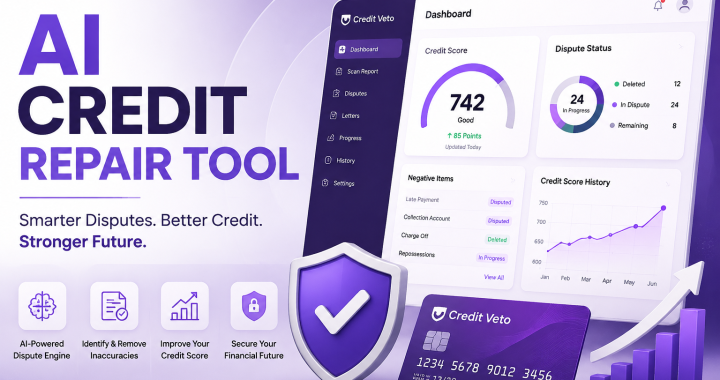
- All-in-One Platform – Review, dispute, monitor, and track your credit repair journey in one place, saving time and reducing frustration.
By combining AI automation, personalized dispute support, and clear tracking, Credit Veto makes removing inaccurate items from your credit report faster, smarter, and more transparent than traditional methods.
Who Can Benefit Most from Credit Veto
Credit Veto is ideal for anyone who wants a faster, smarter, and clearer way to manage credit repair and remove inaccurate items from their credit report.
It is especially useful for people who:
- Have errors on their credit report – Late payments, duplicate accounts, outdated collections, or incorrect personal information can all be flagged efficiently.
- Are frustrated with traditional credit repair – Manual disputes can be slow, confusing, and prone to mistakes. Credit Veto gives full visibility into the process.
- Want personalized dispute support – Each flagged item receives a tailored dispute letter, improving the chances it’s corrected.
- Need real-time tracking – Monitor which disputes have been submitted, under review, or resolved, giving you control over your credit repair journey.
- Prefer a modern, all-in-one solution – Instead of juggling paperwork and multiple bureaus, Credit Veto handles scanning, disputing, monitoring, and tracking in one platform.
By using AI to handle these steps, Credit Veto is best suited for anyone who wants clarity, efficiency, and confidence in correcting errors on their credit report.
READ: Best Credit Repair Software for Credit Repair Business
Conclusion
Inaccurate items on your credit report can lower your score, increase loan costs, and block financial opportunities. Manual disputes can be slow and confusing, leaving you uncertain if your errors are being addressed.
Credit Veto changes that. Its AI-powered system helps you quickly identify and dispute inaccurate, outdated, or unverifiable items while giving you full visibility into the process. You gain control, clarity, and confidence, knowing that the right items are being addressed efficiently.
Don’t let errors on your credit report hold you back. Take action today with Credit Veto and make sure your credit reflects your true financial standing.
FAQs
How can I get things removed from my credit report fast?
The fastest way to remove items from your credit report is to identify inaccurate, outdated, or unverifiable entries and dispute them efficiently. Using a tool like Credit Veto can speed up this process:
Scan your credit reports from all major bureaus (Experian, Equifax, TransUnion) to spot errors.
Dispute only the inaccurate items – AI-powered tools generate personalized dispute letters tailored to each issue.
Track progress in real time – Know which disputes have been submitted, reviewed, and resolved.
While this process can’t remove accurate negative items instantly, using AI and structured dispute management ensures faster, more accurate results than manual disputes.
Can you remove items from your credit report?
Yes, you can remove certain items from your credit report, but only if they are inaccurate, outdated, or unverifiable. Accurate negative items, like legitimate late payments or collections within the legal reporting period, cannot be legally removed.
Tools like Credit Veto help by:
Identifying questionable items across all three major bureaus
Generating personalized dispute letters for each flagged entry
Tracking the dispute process so you know which items are corrected
This makes removing errors faster, more accurate, and easier to manage than attempting disputes manually.
How to get a 700 credit score in 30 days fast?
Reaching a 700 credit score in just 30 days is unlikely, but you can take steps to improve your score quickly:
Dispute errors on your credit report – AI tools like Credit Veto can identify inaccurate, outdated, or unverifiable items and generate personalized disputes.
Pay down credit card balances – Keep your credit utilization below 30% to improve your ratio.
Make all payments on time – Late or missed payments can significantly lower your score.
Increase available credit – Request higher credit limits to reduce utilization.
While these actions may give a noticeable boost, significant improvements usually take several months depending on your credit history.
About The Author

 Best Credit Repair Companies That Are Worth Trusting
  How to Dispute Credit Report Errors and Win in 2026
  Why Did My Credit Score Drop After Paying Off Debt? Proven Fixes
  How to Fix a Low Credit Score Fast: What Works in 2026
  How to Remove Closed Accounts from Credit Report Fast
  Credit Report Dispute Letter: Powerful Template That Gets Results Fast
  How to Remove Inaccurate Items from Your Credit Report Quickly
  The Smartest AI Credit Repair Tool to Fix Your Credit Fast